
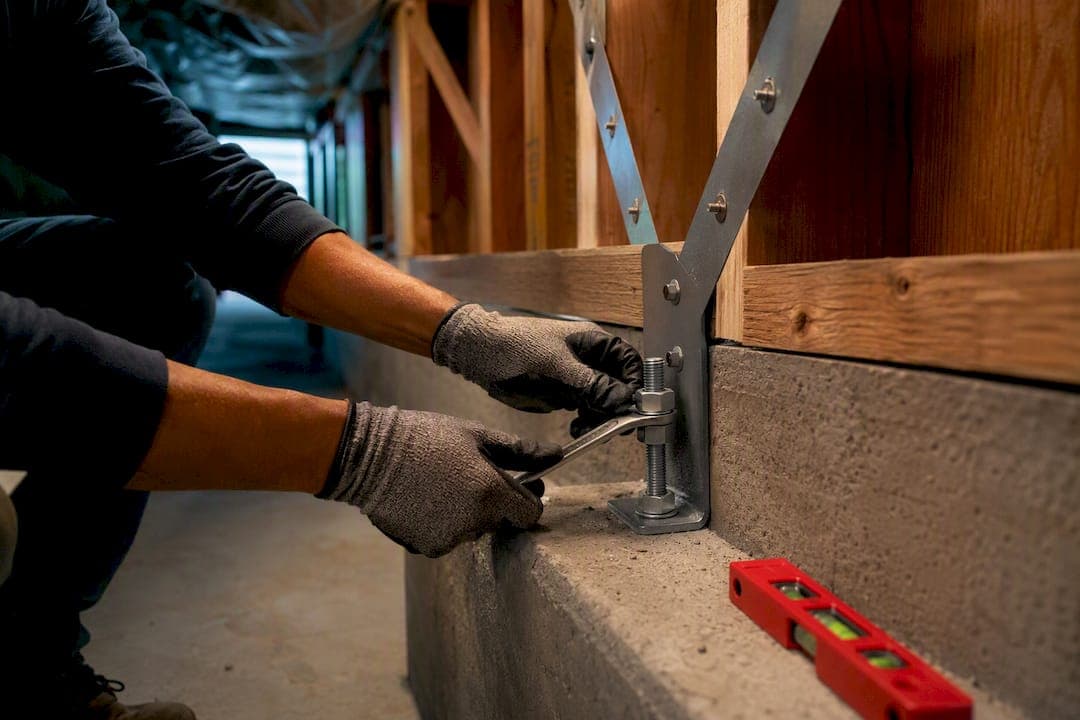
Yes, California homeowners can often get grants for Chapter A3 seismic retrofits. The Earthquake Brace + Bolt program pays up to $3,000 per qualifying house, and income-eligible households may qualify for supplemental grants that cover more. Larger buildings fall under separate soft-story and multi-unit programs with bigger awards. Your first move: check your ZIP code on the California Residential Mitigation Program site and register the moment your area opens.
TL;DR:
- Homeowners in eligible ZIP codes can access grants up to $3,000 for Chapter A3 seismic retrofits, with larger awards for multi-unit buildings.
- Registration must occur early in the funding cycle, permits must be issued after acceptance, and full compliance with Chapter A3 is required for reimbursement.
- Retrofits typically cost $3,000 to $7,000 and involve bolting and bracing, with costs reduced if no engineering stamp is needed.
- Missing documentation, permit timing, or incomplete retrofits can disqualify applicants from funding or delay reimbursement.
- Some cities enforce mandatory retrofit ordinances regardless of grant availability, impacting rental property owners and sale transactions.
Table of Contents
- What Are California's Main Seismic Retrofit Grant Programs?
- Who Qualifies, and How Do You Apply?
- What Does a Chapter A3 Retrofit Actually Involve?
- Permits, Contractors, and Pitfalls That Kill Grant Eligibility
- Financing Beyond Grants: CalCAP and Supplemental Funding
- Does Your City Require a Retrofit Regardless of Grants?
- How Retrofit Status Affects Your Home Sale in Santa Cruz County
- Where to Verify Program Rules and Code Details
- Ready Your Home, Then Ready Your Paperwork
- Sources
What Are California's Main Seismic Retrofit Grant Programs?
The California Residential Mitigation Program (CRMP) is the umbrella agency behind the state's household retrofit incentives, and it runs three distinct grant tracks, depending on what kind of building you own.
- Earthquake Brace + Bolt (EBB): covers single-family homes with raised foundations and cripple walls, the classic California bungalow risk. Bolting the house to its foundation and bracing the cripple walls qualifies for the incentive.
- Earthquake Soft-Story (ESS): targets older multi-story wood-frame apartment buildings with a weak ground floor, often built over garage parking or commercial space.
- Earthquake Multi-Unit Retrofit (EMR): extends grant support to other multi-unit residential buildings that don't fit the soft-story profile but still carry elevated seismic risk.
Award sizes vary by scope and region, but the base EBB payment tops out at $3,000 per qualifying house. ESS and EMR grants tend to run higher because the underlying retrofits are more complex and engineering-driven. CRMP itself operates through funding tied to FEMA and Cal OES hazard mitigation dollars, which is why the programs open and close in cycles rather than staying available year-round.
Supplemental grants can cover up to 100% of retrofit costs for income-eligible households in many areas, though availability shifts by region and by how much funding remains in that cycle.
Who Qualifies, and How Do You Apply?
Eligibility hinges on three things: you have to occupy the home as your primary residence, the house needs to fall within the program's target vintage and construction type (raised wood-frame foundations, generally pre-1980s), and your ZIP code has to be on the active list. CRMP sets those ZIP codes using USGS seismic hazard mapping combined with the share of pre-1940 housing stock in an area, which is how they concentrate limited funding where the risk and the housing age line up.
Here's the sequence that actually works:
- Check your ZIP code on the CRMP or EBB website when a registration window opens.
- Register early. Popular ZIP codes fill fast once a cycle opens.
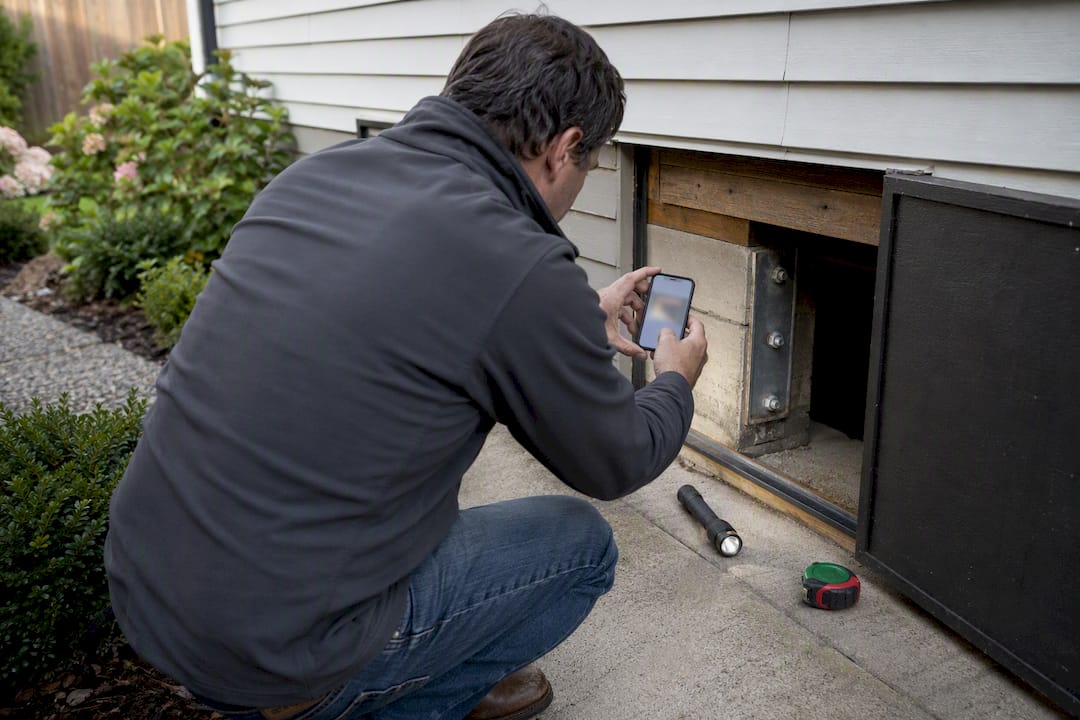
- Gather your pre-retrofit documentation. You'll need eight photos, three of the crawlspace and five of the exterior, along with other required paperwork.
- Wait for selection and acceptance. Grants are competitive within each funding cycle, not automatic.
- Pull your permit after acceptance, never before.
You get a limited time to submit pre-retrofit documentation once registered, and a set period to finish the physical retrofit after approval.
Pro Tip: Take your crawlspace and exterior photos before you contact a contractor. Missing or blurry photos are one of the most common reasons homeowners get bounced back to resubmit, which burns weeks off your 12-week clock.
What Does a Chapter A3 Retrofit Actually Involve?
California Existing Building Code Chapter A3 spells out the prescriptive minimum standard for strengthening older wood-frame houses, and it's worth understanding before you get a contractor bid.
- Sill-plate anchorage: bolting the wood sill plate to the concrete foundation so the house can't slide off during shaking.
- Cripple-wall bracing: adding structural plywood bracing to the short walls between the foundation and the first floor, which are often the weakest link in an older home.
- Water heater strapping: securing the water heater to prevent it from tipping and rupturing gas lines.
There's a real distinction between a Type 1 retrofit, which follows the standard prescriptive path, and a Type 2 retrofit, which requires engineering-stamped plans because the house has an unusual foundation condition, hillside lot, or structural quirk that the prescriptive path doesn't cover.
Cost typically runs $3,000 to $7,000, depending on crawlspace access, regional labor rates, and whether you need an engineer. Bolt-only work without bracing can occasionally land under $3,000. Retrofits reduce collapse risk substantially, but they don't make a house earthquake-proof. Bracing and bolting target the most collapse-prone elements, cripple walls and unbolted sills, which is where most foundation failures start in moderate shaking. Expect your final inspection to flag unrelated code items too. Smoke and carbon monoxide detectors are common add-ons that inspectors require at sign-off, and those costs aren't reimbursed by CRMP.
Permits, Contractors, and Pitfalls That Kill Grant Eligibility
Sequencing matters more than almost anything else in this process. Your permit must be issued after your program acceptance date, not before. Pull a permit too early and you'll likely disqualify yourself from the grant entirely, even if the work itself is code-compliant.
- Hire a licensed contractor (typically a Type A or B general contractor) or check the EBB contractor directory for retrofit specialists.
- Owner-builder retrofits are allowed in some cases, but your own labor isn't reimbursable, and Type 2 houses still need an engineer's stamp regardless of who swings the hammer.
- Watch for partial retrofits. CRMP requires full Chapter A3 compliance, meaning bolting alone without required bracing won't qualify for payment.
- Make sure your permit application uses the correct Chapter A3 language. Vague permit descriptions sometimes get flagged during CRMP review.
- Keep every receipt and photo. Missing documentation is one of the top reasons reimbursement requests get delayed or denied.
Pro Tip: Ask your contractor to reference "CEBC Chapter A3" directly on the permit application. City permit clerks see that phrase constantly and it speeds up processing.
Financing Beyond Grants: CalCAP and Supplemental Funding
If your retrofit costs more than the grant covers, or your ZIP code isn't currently active, financing fills the gap.
- The CalCAP Seismic Safety Financing Program works by giving participating lenders loan loss reserve coverage, which encourages them to offer retrofit loans they might otherwise consider too risky. Only enrolled, participating lenders can offer CalCAP-backed loans, so ask any lender directly whether they're in the program before applying.
- Supplemental grants layered on top of the base EBB award can, for income-eligible homeowners, cover most or all remaining retrofit costs.
- If you combine a CalCAP loan with a grant, the loan generally can't finance costs the grant already reimburses. Lenders exclude grant-covered work from the loan amount, so line up your grant paperwork before you finalize loan terms.
Does Your City Require a Retrofit Regardless of Grants?
Some California cities don't wait for homeowners to volunteer; understanding California rental laws is important for landlords and tenants involved in retrofitting rental properties. Mandatory soft-story ordinances require owners of specific building types, usually older multi-unit wood-frame apartments with weak ground floors, to retrofit on a set timeline whether or not they've applied for a state grant.
- Oakland runs a mandatory soft-story retrofit program with a reduced $250 permit fee for qualifying compliance work.
- Other cities publish their own retrofit notice programs, often with phased compliance deadlines based on building risk tier.
- If you've received a retrofit notice from your city, check your municipal building department's website first. Local rules and fee incentives frequently differ from the statewide EBB program.
How Retrofit Status Affects Your Home Sale in Santa Cruz County
Buyers in Santa Cruz County increasingly ask about seismic retrofit status before they write an offer, especially on homes built before the 1980s. They want to see the permit record, the final inspection sign-off, and ideally the EBB acceptance letter if the retrofit was grant-funded.
Sellers with older raised-foundation homes should pull their permit history and organize retrofit documentation before listing, not after an inspection request. A completed retrofit with clean paperwork tends to move through escrow faster because it removes a negotiation point buyers' agents almost always raise. If your home hasn't been retrofitted, it's important to understand disclosure expectations to avoid escrow issues later in the process. Keeping your closing costs and escrow timeline predictable starts with having retrofit records ready on day one.
Where to Verify Program Rules and Code Details
Before you register or hire anyone, confirm the details yourself.
- EBB Rules & Regulations and homeowner guide for eligibility and forms.
- Chapter A3 code text on UpCodes for prescriptive retrofit scope.
- CalCAP Seismic Safety Financing Program FAQ for lender enrollment details.
Ready Your Home, Then Ready Your Paperwork
The programs work, but they reward homeowners who treat this as a paperwork project first and a construction project second. Everyone focuses on finding a contractor. Few homeowners spend equal energy nailing the registration window, the photo requirements, or the permit sequencing, and that's exactly where grant applications fall apart.
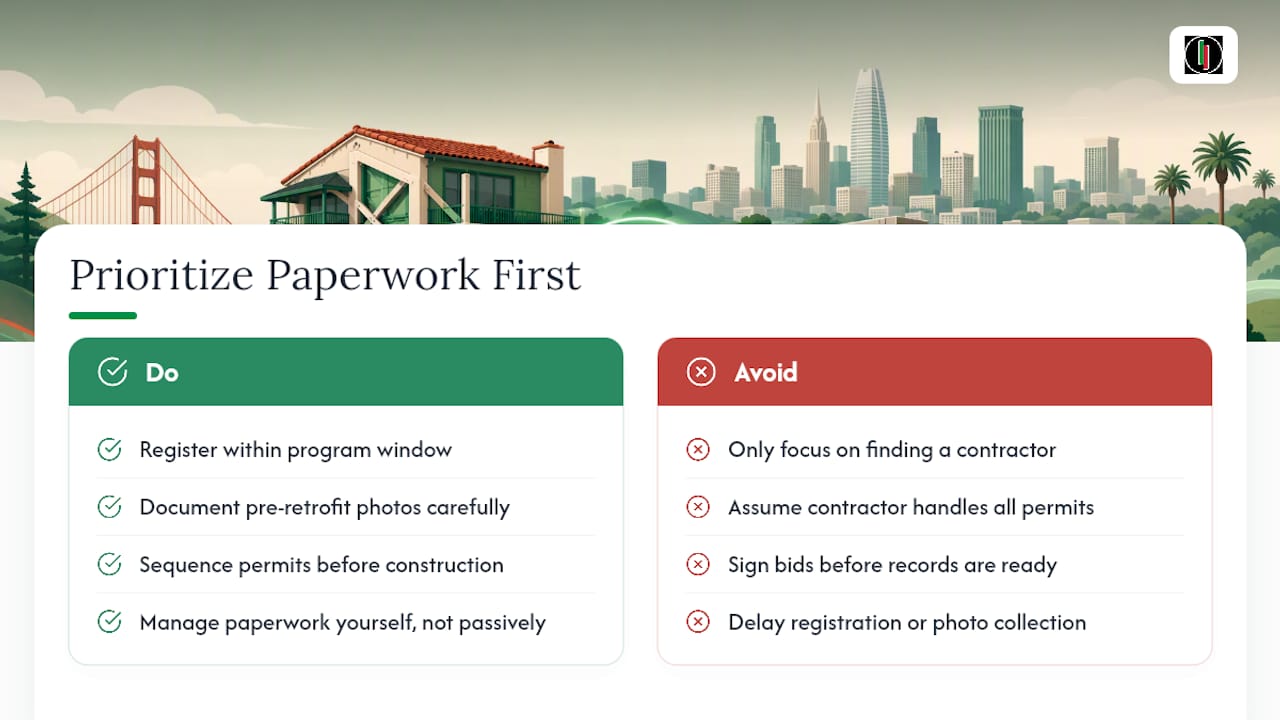
My honest read: the conventional advice to "just hire someone licensed and let them handle it" undersells how much the homeowner has to manage directly. Contractors can bolt a house perfectly and still leave you without a grant if the permit date is wrong or the pre-retrofit photos are missing. Prioritize registration and documentation before you sign a single contractor bid.
If you're weighing whether to retrofit before selling or let a buyer factor it into their offer, that decision usually comes down to your timeline and your neighborhood's buyer pool. A completed retrofit with clean records is typically worthwhile for sellers of older homes. If you want a second opinion on how retrofit status might affect your specific listing or purchase, browse current Santa Cruz County listings or reach out to Desantis Realty Group directly.
— Mario Desantis
Sources
- EBB Rules & Regulations (CRMP) — 2026
- CalCAP Seismic Safety Financing Program — FAQ
- California Existing Building Code Chapter A3 (UpCodes)
- Seismic Safety & Retrofitting | City of Oakland, CA