

Prequalification gives you a fast, informal estimate of what you might borrow based on numbers you report yourself. Preapproval is a verified, documented figure a lender stands behind after checking your income, assets, and credit. If you're just starting to browse listings, get prequalified. If you're touring homes in Aptos or Capitola and plan to write an offer soon, get preapproved.
TL;DR:
- Prequalification is quick and informal, relying on self-reported info with no document review, suitable for early budgeting but carries little weight in offers.
- Preapproval requires verified documentation and a hard credit check, providing a conditional letter that significantly strengthens your credibility in competitive markets.
- Most preapproval letters are valid for 30 to 90 days, so timing and refreshing your documentation are crucial when searches span several months.
- In Santa Cruz County, sellers and agents often demand preapproval letters before showing or accepting offers, making verified preapproval essential in fast-moving neighborhoods.
- Comparing multiple lenders within a 45-day window imposes minimal credit impact, but it's vital to understand what verification each lender conducts to avoid misleading preapproval claims.
Table of Contents
- Preapproval vs Prequalification: What Each One Actually Means
- What Is Mortgage Preapproval and How Does It Work?
- How Do Prequalification and Preapproval Compare Side by Side?
- Which Should You Get, and When?
- What Documents and Timing Should You Expect?
- Why Preapproval Matters More in Santa Cruz County
- Why Buyers Get This Backward More Often Than You'd Think
- How Desantis Realty Group Helps Buyers Get Offer-Ready
- Where These Facts Come From
- Sources
- FAQ
Preapproval vs Prequalification: What Each One Actually Means
Both terms describe a lender's estimate of what you can borrow, but they sit at opposite ends of the verification spectrum. Understanding that gap matters more than memorizing definitions, because the two documents carry very different weight once you're competing for a house.
What is mortgage prequalification?
Prequalification is a quick, informal snapshot. You tell a lender your income, debts, and assets, and they run a soft credit check that doesn't affect your score. Based on that self-reported information, they hand you a rough number.
- Takes minutes to complete, often online or over the phone
- Relies on a soft credit pull and unverified financial details
- Useful for early budgeting before you've picked a neighborhood
- Not backed by document review, so sellers and listing agents give it little weight
Think of prequalification as a gut check. It tells you whether $700,000 or $1.1 million is the realistic range before you start touring open houses in Soquel or Live Oak. It won't get you far once you're ready to compete for a listing.
What Is Mortgage Preapproval and How Does It Work?
Preapproval is the verified version. A lender pulls your credit with a hard inquiry and reviews actual documentation: pay stubs, W-2s, bank statements, tax returns, and often a letter explaining any large deposits. That process typically takes up to 10 business days, though many lenders move faster once your paperwork is complete.
- Requires a hard credit check and full income/asset verification
- Produces a conditional commitment letter, not a final loan
- Typically valid for 30 to 90 days before it needs to be refreshed
- Carries far more credibility with sellers and their agents than a prequalification letter
Fast fact: Sellers in competitive markets expect preapproval documentation before they'll seriously consider shortlisting an offer, especially when multiple bids land the same week.
None of this locks in your loan. Even a fully verified preapproval isn't a final approval; the lender still underwrites the specific property, orders an appraisal, and confirms nothing has changed with your finances between preapproval and closing.
How Do Prequalification and Preapproval Compare Side by Side?
The two processes differ across five practical dimensions that matter to a buyer deciding what to pursue next.
| Factor | Prequalification | Preapproval |
|---|---|---|
| Verification level | Self-reported, unverified | Documents reviewed by underwriter |
| Credit check type | Soft pull (no score impact) | Hard pull (affects score slightly) |
| Typical turnaround | Minutes to same day | Up to 10 business days |
| How it's used in an offer | Informal budget signal | Attached to offers as proof of financing |
| Typical validity | Short, often reissued easily | 30 to 90 days, then needs refreshing |
Lenders don't always use these labels consistently. Some issue a "preapproval" that's really just a desk check against reported numbers, without touching your documents. Ask directly what a lender verifies rather than trusting the term on the letterhead. That single question can save you an awkward moment when a listing agent asks for proof and your "preapproval" turns out to be unverified.
Which Should You Get, and When?
Match the letter to where you actually are in the search.
- Just starting to look? Get prequalified. It protects your credit from unnecessary hard inquiries while you figure out whether Scotts Valley or Boulder Creek fits your budget better than the coastal neighborhoods.
- Touring homes and eyeing a specific price range? Move toward preapproval once you've narrowed your search, especially if inventory in your target area is thin.
- Ready to write offers? Get fully preapproved before you tour anything you'd actually put an offer on. In Pleasure Point or Seabright, homes can draw multiple offers within days, and an unverified letter puts you behind buyers who are ready to move.
Before choosing a lender, ask three questions: Do you verify income and assets, or just take my word for it? Is this a soft or hard credit pull? How long is the letter valid? A "preapproval" that skips verification is a red flag disguised as an advantage.
Pro Tip: Get preapproved with your down payment amount locked in, not a placeholder figure. Changing that number later can change your loan terms and force a re-verification right when you're trying to close fast.
What Documents and Timing Should You Expect?
Lenders lean on a fairly standard document set once you move to preapproval:
- Pay stubs covering the last 30 days
- W-2s or 1099s for the past two years
- Full tax returns for the past two years
- Bank statements for the last two months
- Government-issued photo ID
Prequalification takes minutes because none of this gets checked. Preapproval takes longer because underwriters verify every figure against paperwork.
Credit-score mechanics worth knowing: if you shop multiple lenders for a mortgage, most scoring models treat those inquiries as a single event as long as they happen within about 45 days. Comparing three or four lenders in that window costs you roughly the same credit hit as comparing just one.
Why Preapproval Matters More in Santa Cruz County
Santa Cruz County's tightest micro-markets don't give buyers much room to figure things out on the fly. In Aptos, Capitola, and Pleasure Point, well-priced listings routinely draw competing offers within the first week, and listing agents use preapproval letters to sort serious buyers from window shoppers almost immediately.
- Sellers in Scotts Valley and Seabright often ask for a preapproval letter before scheduling a private showing, not just before accepting an offer
- Agents use the letter to confirm loan amount, down payment, and lender contact before presenting your offer
- Because letters expire in 30 to 90 days, buyers searching longer than that in a slow-moving segment like Ben Lomond or Boulder Creek should refresh their preapproval rather than let it lapse mid-search
Timing your preapproval to your actual search window, not to when you first started thinking about buying, keeps you ready the moment the right Santa Cruz County listing appears.
Why Buyers Get This Backward More Often Than You'd Think
Most buyers treat prequalification and preapproval as a formality to check off before they start touring homes. That's backward. The real value of understanding the difference is knowing when to upgrade, not just that you eventually should.
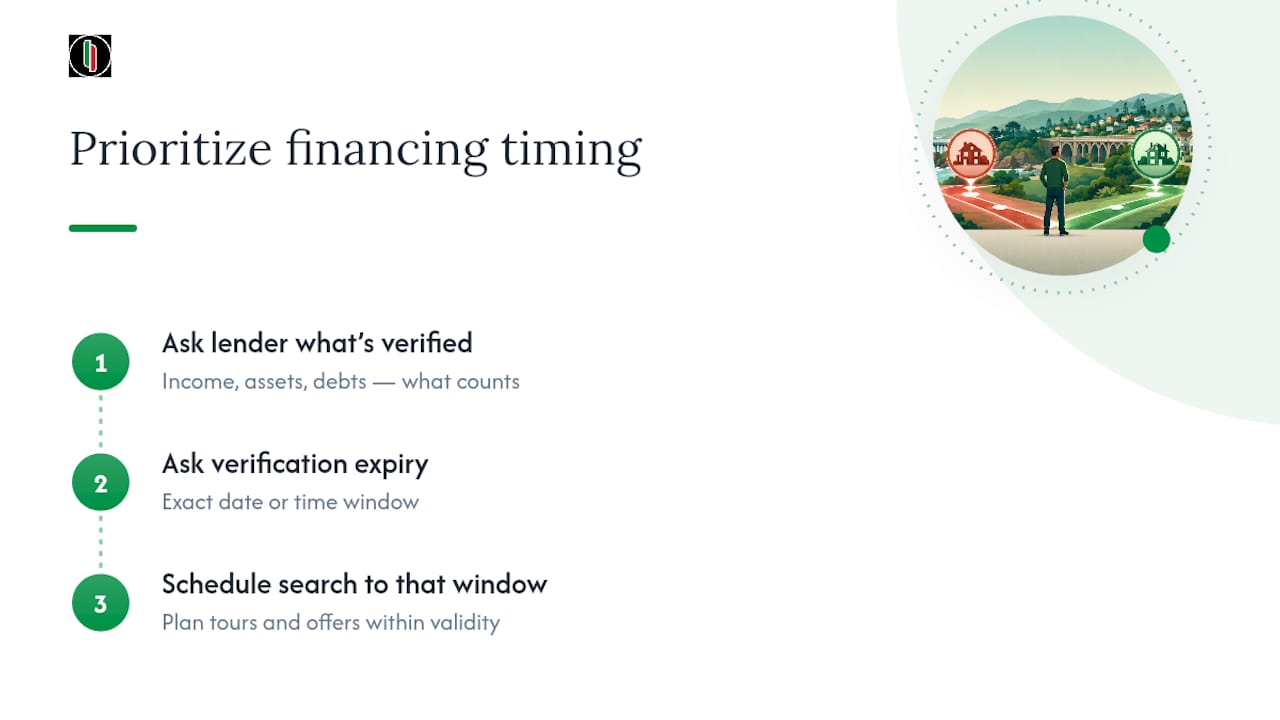
I see buyers get prequalified once, early on, and assume that number is locked in for the rest of their search. It isn't. Rates move, debt loads change, and a prequalification number from four months ago tells a seller nothing about what you can actually close on today. The conventional advice, "get preapproved before you shop," undersells how much timing matters once you're in it. A stale preapproval in a fast-moving pocket like Pleasure Point or Seabright can cost you a house just as easily as having no letter at all.
What buyers should prioritize first is asking their lender exactly what gets verified and when that verification expires, then building their home search calendar around that window rather than the other way around.
— Mario Desantis
How Desantis Realty Group Helps Buyers Get Offer-Ready
Assembling pay stubs, coordinating with a lender, and timing a preapproval letter so it's still fresh at the offer stage is a lot to juggle on your own, especially while touring homes across Aptos, Capitola, and Scotts Valley in the same week. That's where local guidance closes the gap between generic mortgage advice and what actually wins a house here.

Desantis Realty Group works alongside your lender to keep the preapproval process moving. That means flagging document gaps before they slow you down, confirming your letter's validity window lines up with your active search, and presenting your preapproval to sellers in a way that signals you're ready to close, not just ready to look. With transactions closed across Santa Cruz County's most competitive neighborhoods, Mario Desantis and his team know which listings draw multiple offers fast and which lenders move quickly when your window is tight. Start with the first-time home buyer guide to see what to prepare before your first showing, or browse active listings once your preapproval is in hand.
Where These Facts Come From
Details on verification standards and buyer protections come from the Consumer Financial Protection Bureau, with process comparisons drawn from Bankrate and Rocket Mortgage.
This article is general information, not a substitute for advice from a qualified financial advisor. Consult a qualified financial professional about your own circumstances before acting on anything here.
Sources
- What’s the difference between a prequalification letter and a preapproval letter? | Consumer Financial Protection Bureau
- Preapproval vs. prequalification | Rocket Mortgage
FAQ
Is Preapproval the Same as Final Loan Approval?
No. Preapproval is a conditional commitment based on verified documents, but final approval only happens after you have a signed purchase contract and the lender completes full underwriting on that specific property.
Does Prequalification Hurt My Credit Score?
No, prequalification typically relies on a soft credit pull, which doesn't affect your score, while preapproval involves a hard inquiry that can cause a small, temporary dip.
How Long Does a Preapproval Letter Last?
Most preapproval letters are valid for 30 to 90 days, after which you'll need to update your documents and refresh the letter if your search continues.
Can I Shop Multiple Lenders Without Hurting My Credit?
Yes. Comparing lenders within roughly a 45-day window typically counts as a single inquiry under most scoring models, so rate shopping costs little extra.
Should I Get Preapproved Before Touring Homes in Santa Cruz County?
If you're browsing casually, prequalification is enough, but in fast-moving areas like Aptos, Capitola, or Pleasure Point, sellers often expect a verified preapproval before they'll schedule a showing or seriously consider your offer.