
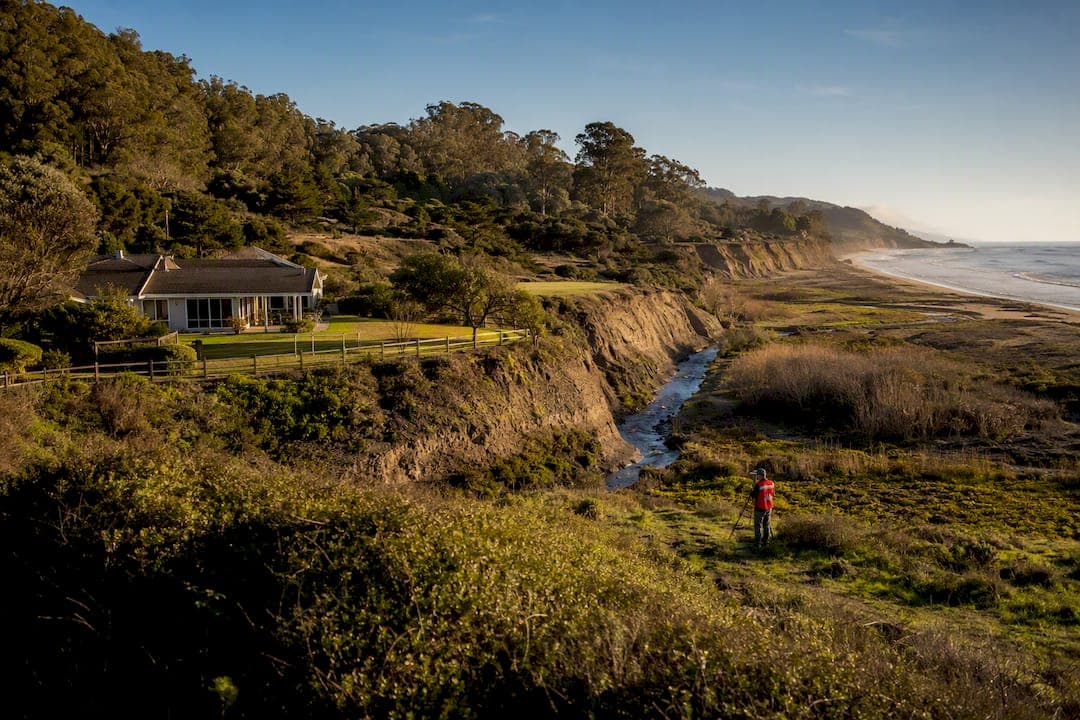
California law requires sellers to deliver a Natural Hazard Disclosure Statement whenever a property sits inside one or more of six government-mapped hazard zones, covering flood, fire, dam inundation, and earthquake risk. The disclosure comes from map data, not the seller's memory, so an accurate NHD is required even when the seller has never personally noticed a hazard. If the report shows up after you have already accepted an offer, you get a short rescission window to walk away. For the statutory framework, Civil Code §1103 spells out exactly which properties qualify and what the report must contain.
TL;DR:
- Ordering the Natural Hazard Disclosure early in the listing process prevents last-minute rescission risks caused by delayed reports.
- A "yes" on hazard zones such as flood, fire, dam inundation, or earthquake must prompt follow-up questions about insurance costs and permits, not immediate deal termination.
- Most NHD reports are completed within one to two business days when ordered promptly from licensed vendors, reducing errors and outdated map issues.
- AB 38 requires older homes within fire hazard zones to have specific retrofitting documentation before or during escrow, influencing negotiations and insurance.
- Exemptions from the NHD exist for certain transfers, but inaccuracies or map updates can lead to significant disputes, often resolved better with expert reports.
Table of Contents
- What the Natural Hazard Disclosure Is and How It Differs From the TDS
- The Six Hazard Zones the NHDS Actually Covers
- Timing, Delivery, and What Happens if the NHD Arrives Late
- Who Orders the NHD and Why Third-Party Reports Are Standard
- AB 38: The Extra Wildfire Disclosure Older Homes Need
- How to Order and Use an NHD Report During Escrow
- Exemptions, Report Errors, and When to Dig Deeper
- A Local Perspective on Getting This Right in Santa Cruz County
- Let Desantis Realty Group Handle Your Disclosure Timeline
- Sources
What the Natural Hazard Disclosure Is and How It Differs From the TDS
The Natural Hazard Disclosure Statement, usually just called the NHD or NHDS, is a state-mandated report that tells buyers whether a property falls within one or more of six specific hazard zones defined by Civil Code sections 1103 through 1103.14. It sounds bureaucratic. It is actually one of the more straightforward parts of a California real estate transaction, once you understand what it does and doesn't do.
Here's the distinction that trips up a lot of first-time sellers: the NHD is objective, and the Transfer Disclosure Statement (TDS) is subjective. The TDS asks what you personally know about the property, things like a leaky roof or a noisy neighbor. The NHD asks a different question entirely: does this parcel sit inside a boundary that a government agency has drawn on a map? You don't get to answer based on gut feeling or thirty years of quiet living on the property. The map answers for you.
That distinction matters legally too. The NHD is a disclosure, not a warranty. Delivering it doesn't mean Desantisrealty or any agent is guaranteeing the property is safe from fire or flood, and it doesn't mean the seller is promising anything about future risk. It means the seller is passing along what the official maps currently say, accurately and on time.
A complete NHD packet typically includes:
- The core NHDS form itself, checking yes, no, or "do not know" for each of the six zones
- A copy of the natural hazard map excerpts the report relies on
- Local or optional disclosures some counties layer on top of the state requirements
- Environmental hazard notices covering things like former military ordnance locations or industrial use zones, when applicable
Most agents bundle the NHD with the TDS and deliver both together during the disclosure period, but they are legally separate documents answering separate questions. Confusing the two is one of the more common (and avoidable) escrow headaches we see.
The Six Hazard Zones the NHDS Actually Covers
Every NHDS checks a property against six statutory zones, and a single parcel can land in more than one. Coastal properties near creeks or bluffs in Santa Cruz County, for example, sometimes trigger both flood and fire designations on the same report.
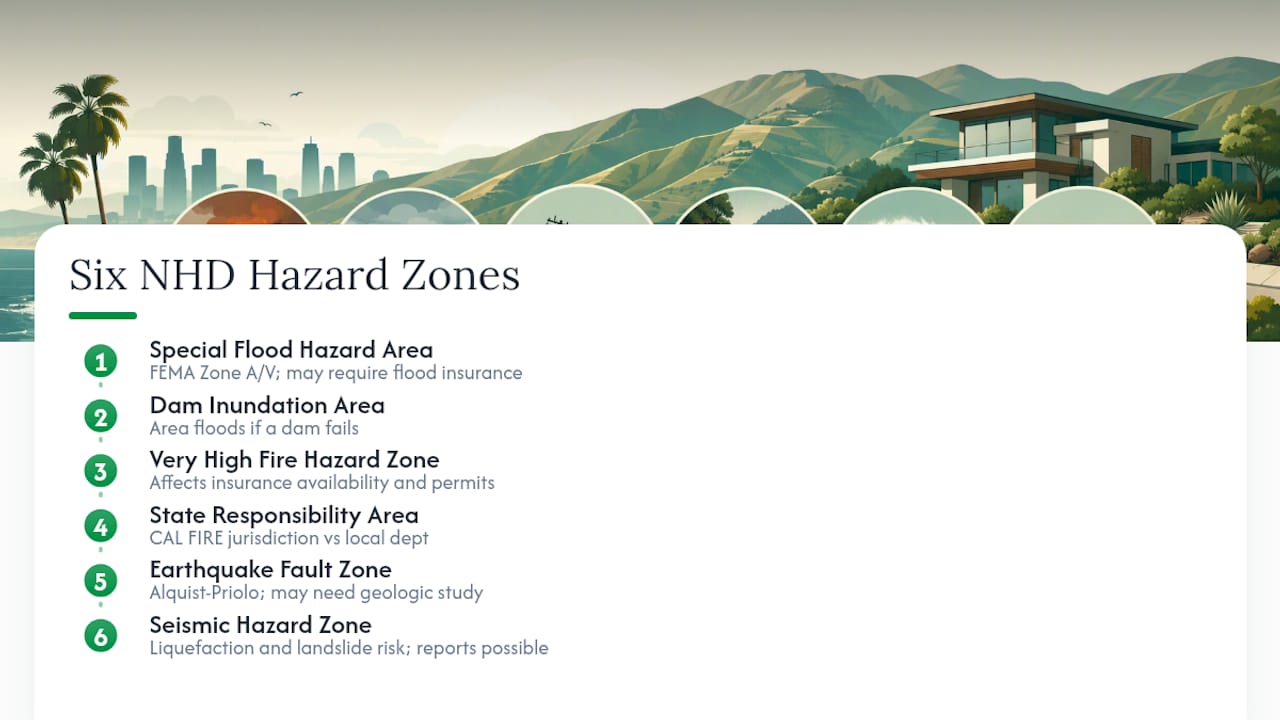
Special Flood Hazard Area. FEMA draws these boundaries on Flood Insurance Rate Maps, and Zone A or Zone V designations are the ones that matter here. Landing inside one usually means your lender will require flood insurance as a condition of the loan, not just a suggestion. That can add a real, recurring cost buyers don't always budget for upfront.
Dam inundation area. The California Office of Emergency Services maps the areas that would flood if a nearby dam failed. Most buyers have never thought about this until they see it checked "yes" on a report, and it rarely changes financing, but it's worth understanding before you sign.
Very High Fire Hazard Severity Zone. CAL FIRE and local fire authorities jointly maintain these maps, and the designation increasingly affects both insurance availability and permitting requirements for rebuilds or additions. Insurers have gotten pickier about writing new policies in these zones over the past few years.
State Responsibility Area. This one tells you who actually shows up when there's a wildfire nearby, CAL FIRE crews versus a local fire department. It's a jurisdictional fact more than a risk score, but it shapes response times and, indirectly, insurance underwriting.
Earthquake Fault Zone. Also called an Alquist-Priolo zone, this designation from the California Geological Survey can trigger mandatory geologic investigation before certain new construction or additions are permitted.
Seismic Hazard Zone. Distinct from the fault zone above, this covers liquefaction and landslide risk. It can also require a site-specific geologic report depending on what you're planning to build.
Pro Tip: A "yes" on any of these six boxes is not a deal breaker. It's a prompt to ask the right follow-up question, usually about insurance cost or permitting, before you get further into escrow.
Timing, Delivery, and What Happens if the NHD Arrives Late
Sellers, or the agents representing them, must deliver the NHDS "as soon as practicable before transfer of title," language that comes straight from Civil Code §1103.3. The California Attorney General clarified what that phrase actually means in Opinion No. 01-406, concluding that delivery has to happen promptly under the circumstances, and that a buyer can terminate the offer entirely if the NHDS hasn't shown up by the scheduled transfer date.
In practice, most agents deliver the NHD alongside the TDS during the initial disclosure package, well before the buyer's contingency deadlines. That's the safest path, and it's what we build into every listing timeline at Desantisrealty.
But if the report doesn't arrive until after the buyer has already accepted the purchase offer, a specific rescission clock starts running:
- Three calendar days if the NHD was delivered in person
- Five calendar days if it was delivered by mail
A buyer's right to walk away during that window is unconditional. They don't need a reason tied to what the report says. Late delivery alone is enough to trigger a clean rescission, no negotiation required.
This is where a lot of last-minute cancellations come from, and it's almost always preventable. If the NHD gets ordered early in the listing process, this scenario simply doesn't arise.
What happens if a seller skips the disclosure altogether, or gets it wrong? Under Civil Code §1103.13, a seller who willfully or negligently fails to provide an accurate NHD can be liable for the buyer's actual damages, meaning the buyer must prove a real financial loss connected to the omission, not just claim general frustration. Before closing, though, the more common and more powerful remedy is simpler: the buyer can just decline to proceed. That leverage disappears the moment title transfers, which is exactly why getting this right before closing matters so much more than trying to fix it after.
Who Orders the NHD and Why Third-Party Reports Are Standard
In the overwhelming majority of California transactions, the listing agent orders the NHD report on the seller's behalf, right around the time the property goes on the market. Payment is usually the seller's responsibility, though nothing stops a purchase contract from shifting that cost to the buyer, it's a negotiable line item like any other.
Almost nobody fills out an NHDS from scratch by manually cross-referencing state and federal maps. Instead, Civil Code §1103.4 allows sellers to use a substituted disclosure: a third-party report from a licensed vendor that pulls the relevant map data and produces the completed statement. This is standard industry practice, and it shifts a meaningful share of the factual liability, the actual map lookups, onto the vendor rather than the seller personally.
That said, the seller and agent are still on the hook for making sure the report gets delivered to the buyer on time. Ordering the report solves the research problem; it doesn't solve the timing problem.
A few things worth confirming with any vendor before you rely on their report:
- Turnaround time, most produce a completed report within one to two business days
- Whether they carry errors and omissions (E&O) insurance covering the report's accuracy
- Whether the report includes local or county-level disclosures on top of the state-mandated six zones
Pro Tip: Ask your vendor whether their report reflects the most recent map updates. CAL FIRE and FEMA both revise their boundaries periodically, and a report generated from outdated data can create real problems mid-escrow.
AB 38: The Extra Wildfire Disclosure Older Homes Need
The NHD tells a buyer whether a property sits in a fire hazard zone. It says nothing about the house itself, and that gap is exactly what AB 38 was written to close.
Since requirements began phasing in, homes built before January 1, 2020 that sit within a Very High Fire Hazard Severity Zone or a State Responsibility Area face an additional, home-specific fire-hardening disclosure requirement, separate from and in addition to the NHDS. Where the NHD answers "is this parcel in a fire zone," AB 38 asks "has this specific structure been retrofitted to survive one."
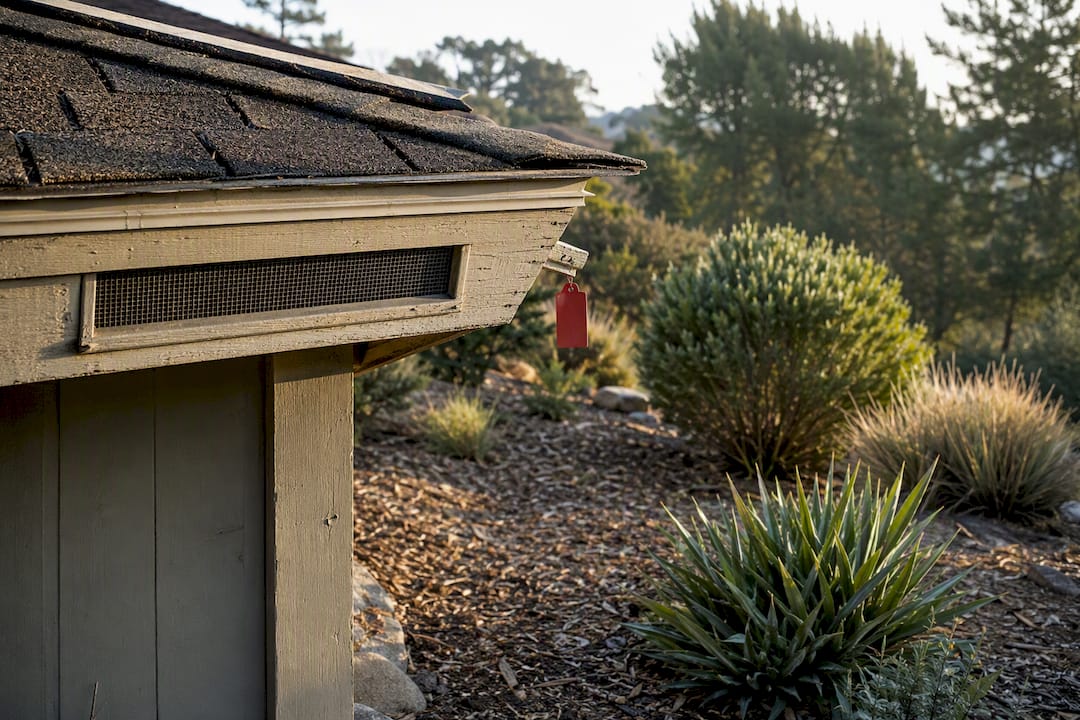
That distinction has real teeth in a transaction. Sellers of qualifying older homes need documentation covering things like ember-resistant vents, defensible space clearance, and roof materials. Buyers increasingly ask for this documentation upfront, and its absence has become a genuine negotiating point, sometimes affecting price, sometimes triggering a request for a retrofit credit. Insurers are watching this closely too; several carriers now factor AB 38 compliance into underwriting decisions for coastal and foothill properties.
How to Order and Use an NHD Report During Escrow
Handling the NHD well is less about legal complexity and more about sequencing. Get the order timing right, and almost everything downstream falls into place.
- Order the report at listing, not at offer acceptance. The earlier it's in hand, the earlier it can go into the initial disclosure package, which sidesteps the whole rescission-window problem entirely.
- Verify the parcel number matches the property exactly. This sounds obvious. It is also the single most common source of NHD errors, particularly on properties with recent lot splits or boundary adjustments.
- Read every "yes" answer against the underlying map, not just the summary page. A flood zone designation on the edge of a boundary line reads very differently than one dead in the middle of a Special Flood Hazard Area.
- Loop in a specialist the moment a hazard shows up. A "yes" on the earthquake fault zone might warrant a quick call to a geotechnical engineer before the buyer's contingency period runs out, not after.
- Check insurance availability and pricing early, particularly for fire and flood zones, since some carriers have pulled back from writing new policies in specific high-risk areas.
- Document delivery in writing. Note the date and method of delivery in the transaction file. If a rescission dispute ever comes up, that record is what settles it.
- Renegotiate before you walk away, if the numbers still work. A hazard finding doesn't have to kill a deal. It's often just leverage for a price adjustment or an insurance credit.
Pro Tip: If you're buying in an area with layered risk, say a fire zone that also touches a seismic hazard zone, ask your agent to pull comparable insurance quotes before your contingency period closes, not after. Insurance surprises are far easier to negotiate around while you still have leverage.
For buyers walking through this in real time, understanding the escrow timeline around contingencies makes it much easier to know exactly when hazard findings need to be resolved.
Exemptions, Report Errors, and When to Dig Deeper
Not every transfer requires an NHDS. Common exemptions include transfers by foreclosure or trustee's sale, transfers between co-owners, transfers through probate or a trust settlement, and certain transfers between spouses or domestic partners. If you're unsure whether your specific transaction qualifies for an exemption, that's a question for your agent or a real estate attorney before you assume you're off the hook.
Even legitimate reports go wrong sometimes. Watch for:
- Parcel mismatches, where the report was pulled against a slightly wrong parcel number
- Map version gaps, since CAL FIRE and FEMA both update boundaries periodically and a report can lag behind
- County-specific overlays that some jurisdictions add on top of the state's six zones and that generic vendor reports occasionally miss
When a report comes back ambiguous or contradicts what you know about the property, a site-specific geotechnical or flood study from a licensed professional settles it far better than arguing over map interpretation. Under DRE guidance, a seller who wants to mark "no" instead of "do not know" on an uncertain answer generally needs an expert report to back that up.
A Local Perspective on Getting This Right in Santa Cruz County
Having closed over $200 million in transactions across Santa Cruz County since 2020, Desantis Realty Group has seen how often NHD timing, not the hazard finding itself, is what actually derails a deal. Coastal parcels here frequently stack a flood zone against a fire severity zone in the same report, and buyers rarely expect that combination until it's sitting in front of them.
The fix is almost never complicated. Order the report early, verify the parcel details against the county's own maps, and loop in a specialist the day a hazard shows up rather than the week before closing. That sequencing, more than any legal technicality, is what keeps a transaction moving instead of stalling in the final stretch.
— Team
Let Desantis Realty Group Handle Your Disclosure Timeline
Getting an NHD ordered late is one of the easiest ways to lose weeks in escrow, and it's entirely avoidable with the right sequencing from day one. Desantis Realty Group builds hazard disclosure timing into every Santa Cruz County listing from the moment it goes live, coordinating vendor reports, specialist follow-ups, and delivery documentation so a rescission clock never becomes a surprise.

Whether you're preparing to list a home in a fire severity zone or shopping for a property near the coast where flood and seismic zones tend to overlap, having someone track the paperwork timeline matters as much as finding the right price. Our seller's guide walks through exactly how we handle disclosure coordination alongside pricing and negotiation strategy, and if you're on the buying side, our current listings reflect properties we've already vetted for exactly these issues. Reach out for a free consultation on your disclosure timeline before you put a property on the market or submit an offer.
This article is general information, not a substitute for advice from a qualified lawyer. Consult a qualified legal professional about your own circumstances before acting on anything here.
Sources
- California Civil Code §1103 (Natural Hazard Disclosure)
- Opinion No. 01-406 (California Attorney General)
- FEMA — Flood maps and NFIP
- California Department of Conservation / California Geological Survey