
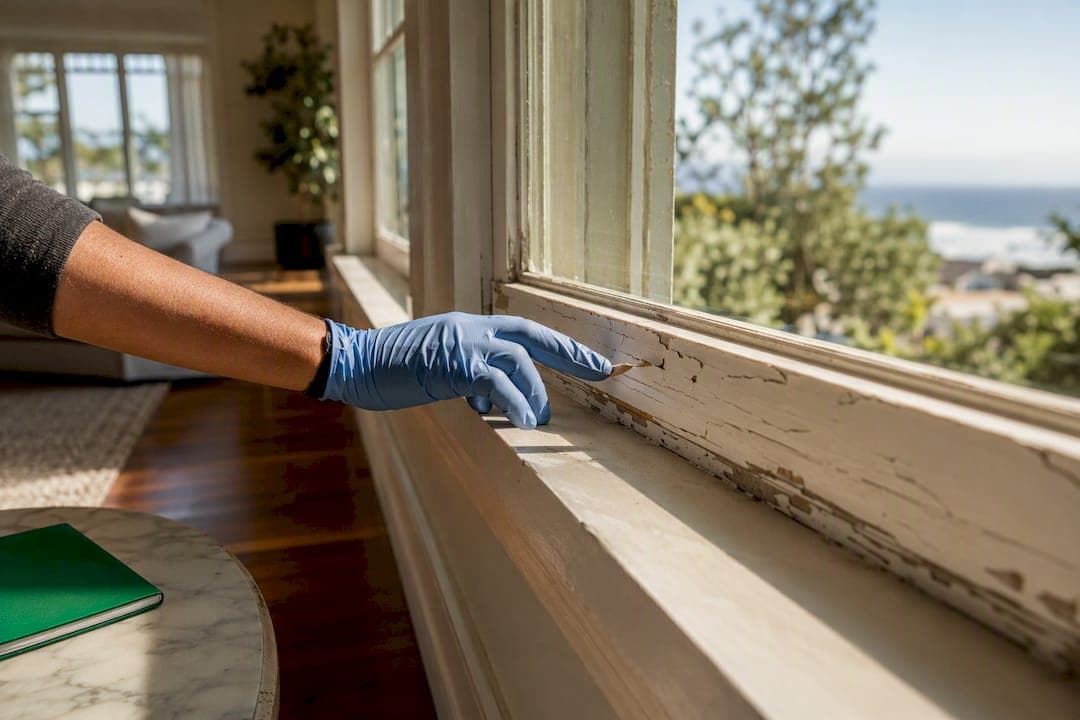
Yes. For most California homes built before 1978, sellers and landlords must provide a signed lead-based paint disclosure along with the EPA pamphlet before a contract or lease is signed. Buyers get a right to inspect for lead hazards, and signed forms have to be kept for a minimum retention period as required by law. California layers its own certification rules from CDPH on top of the federal requirement.
TL;DR:
- Sellers and landlords must provide a signed lead-based paint disclosure and the EPA pamphlet before a contract or lease is signed for most homes built before 1978 in California.
- Buyers have a standard 10-day window, which can be shortened or waived with written agreement, to conduct a lead inspection or risk assessment before signing.
- Disclosing "no known hazards" does not exempt parties from completing and retaining the disclosure form and pamphlet acknowledgment.
- Certified lead inspectors and assessors, holding California CDPH certification, are required for professional lead testing and hazard assessment work.
- Local jurisdictions may impose additional lead-related requirements, including periodic inspections or hazards reporting, beyond state and federal disclosure rules.
Table of Contents
- What Federal and California Rules Require for Lead Paint Disclosure
- Who Has to Disclose Lead Paint, and When Does the Rule Apply?
- What Rights Do Buyers and Renters Have Before Signing?
- How to Complete a Compliant Lead Disclosure Form
- Where to Find Certified Lead Inspectors in California
- What Happens When Lead Disclosure Rules Are Violated?
- A Local Agent's View on Lead Disclosure Compliance
- Lead Exposure Risk and What It Means for California Families
- Do Local City or County Rules Add to State Lead Disclosure Requirements?
- Renovating a Rental With Lead Paint: What Landlords Need to Know
- Why the Paperwork Matters More Than People Assume
- Get Local Help With Your Lead Disclosure Paperwork
- Sources
What Federal and California Rules Require for Lead Paint Disclosure
The federal disclosure duty comes from Title X, specifically Section 1018, which covers most housing built before January 1, 1978. Under 24 CFR Part 35 and 40 CFR Part 745, sellers, landlords, and their agents must disclose everything they know about lead-based paint on the property and hand over any records or reports they have, even old ones.
Every transaction needs a signed Lead Warning Statement. This is language, built into the disclosure form, that confirms the buyer or tenant understands the property may contain lead hazards. Alongside it, the seller or landlord must deliver the EPA pamphlet, Protect Your Family from Lead in Your Home, which walks through how lead hazards form and how to manage them.
California adds its own layer. The California Department of Public Health reinforces the federal rule and folds lead disclosure into standard practice under the state's broader real property disclosure framework, referenced in forms like the RE 6 guidance from the California Department of Real Estate.
Who Has to Disclose Lead Paint, and When Does the Rule Apply?
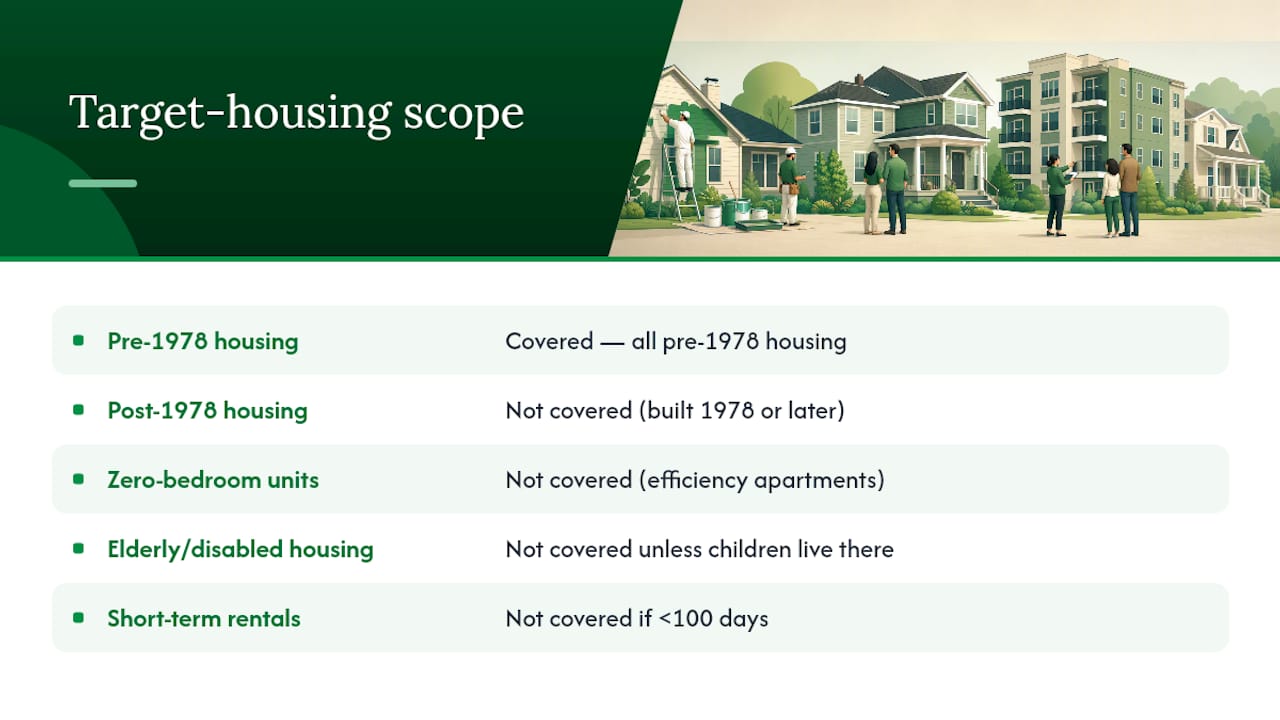
The rule applies to "target housing," which is basically any residential property built before 1978, with a few carve-outs: housing built in 1978 or later, zero-bedroom units like efficiency apartments, housing exclusively for the elderly or disabled (unless children live there), and short-term rentals under 100 days. Everything else built before the cutoff is covered, no exceptions for condition or renovation history.
Responsibility spreads across the transaction. Sellers and lessors carry the primary duty, but real estate agents and property managers share liability if they know about a hazard and stay quiet. In multi-unit buildings, owners have to share any lead inspection or testing records that apply to common areas or other units in the same building, not just the specific unit being sold or rented.
What Rights Do Buyers and Renters Have Before Signing?
Before a buyer or tenant signs anything, they're entitled to specific protections built into the federal disclosure rule. The most significant is the 10-day inspection window, though the timeline isn't fixed in stone.
- Buyers get a default period to conduct a lead-based paint inspection or risk assessment before they're bound by the contract, which can be adjusted by mutual agreement.
- That window can be shortened, lengthened, or waived entirely, but only through a written agreement signed by the buyer.
- Renters typically don't get the same inspection right, but they still must receive the EPA pamphlet and any known hazard information before signing a lease.
- Sellers and landlords must share existing lead inspection reports, risk assessments, or abatement records, not just a summary.
- Signed disclosure forms and pamphlet acknowledgments must be retained for the legally required minimum retention period from the date of signing.
The pamphlet requirement isn't a formality. It's the primary tool the EPA uses to educate buyers and renters on what lead exposure actually looks like and how to reduce it, and skipping it is one of the most common compliance failures agents catch during a transaction.
How to Complete a Compliant Lead Disclosure Form
The EPA provides sample disclosure forms in English and Spanish, and most California transactions build directly from that template. The updated version asks sellers and landlords to describe what they actually know, rather than checking a simple yes or no box.
Here's how to work through it:
- Complete the Lead Warning Statement exactly as written. Don't paraphrase it.
- Describe any known lead-based paint or hazards, including specific locations (window sills, trim, exterior siding) and their condition.
- List every available record or report, even partial ones, such as old inspection results or prior abatement work.
- Attach the EPA pamphlet and get a signed acknowledgment that it was received.
- Build the 10-day inspection option directly into the purchase contract or lease, spelling out how a buyer can shorten or waive it in writing.
- Collect signatures from all parties, including agents, and keep copies (digital is fine) for a minimum of three years.
Pro Tip: If you genuinely have no knowledge of lead hazards, you still need the form and the pamphlet. "No known hazards" is a disclosed fact, not an exemption from paperwork.
Where to Find Certified Lead Inspectors in California
California requires anyone doing lead risk assessment, inspection, or abatement work professionally to hold certification through the state's Lead-Related Construction program, which CDPH administers under Title 17. That regulation also defines what counts as lead-based paint: coatings at or above 1.0 mg/cm² or 0.5% by weight.
CDPH maintains a list of certified inspectors and assessors, and the EPA runs its own professional locator tool for firms licensed to work with lead. Before hiring anyone, ask directly whether they hold current CDPH certification and whether they carry liability insurance for lead work specifically.
Home test kits can flag an obvious problem, but they're not a substitute for a certified inspection when you need something you can put in escrow paperwork or rely on for a legal disclosure.
What Happens When Lead Disclosure Rules Are Violated?
Federal law allows for civil penalties, and knowing violations can trigger criminal liability in serious cases. California adds its own enforcement layer through CDPH and local health departments.
If you're a buyer or renter who suspects a seller or landlord skipped disclosure, you can report it directly through EPA's violation reporting page or reach HUD directly. In an active transaction, escrow holds, formal inspection requests, and negotiated repair credits are the practical tools buyers use to protect themselves without walking away from the deal entirely.
A Local Agent's View on Lead Disclosure Compliance
At Desantis Realty Group, preparing a lead disclosure starts well before a listing goes live. We pull whatever records exist, coordinate directly with certified inspectors when a property's age or condition calls for it, and walk sellers through exactly what "known information" means before they sign anything.
Since 2020, our team has guided more than 175 clients through transactions across Santa Cruz County, Monterey, and Silicon Valley, many involving homes old enough to fall under Title X. That repetition matters. We've seen how a rushed disclosure creates problems in escrow months later.
In competitive markets, buyers sometimes want to waive the 10-day inspection window to strengthen an offer. We document every waiver in writing and make sure clients understand exactly what they're giving up before they sign.
Lead Exposure Risk and What It Means for California Families
Lead exposure hits children hardest, and California's older housing stock, especially in coastal towns and inland cities built out before the 1970s, keeps this a live concern decades after lead paint was banned for residential use in 1978. Children under six are most vulnerable because their developing nervous systems absorb lead more readily, and normal toddler behavior, crawling on floors, mouthing window sills, chewing on painted trim, puts them directly in contact with deteriorating paint dust.
Lead dust from friction surfaces (windows, doors) and chipping or peeling paint is the most common exposure pathway in older homes, more so than paint chips themselves. Renovation work on a pre-1978 property can generate that dust in volume if it isn't handled with lead-safe practices, which is part of why disclosure and safe work practices are treated as connected issues rather than separate ones.
California's disclosure rule doesn't require anyone to fix a lead hazard. It requires transparency about what's known, so the buyer or tenant can decide how to handle the risk, whether that means ordering an inspection, negotiating remediation, or budgeting for future abatement themselves. That distinction trips people up constantly. A signed disclosure form is not a clean bill of health. It's a paper trail showing what the seller or landlord actually knew, or didn't, at the time of the transaction.
For families with young children considering an older home, the disclosure form and the EPA pamphlet together are the starting point for a real conversation about whether further testing makes sense before move-in day.
Do Local City or County Rules Add to State Lead Disclosure Requirements?
The federal disclosure rule and CDPH's guidance set the floor for California, but they're not the ceiling. Some cities and counties layer additional requirements on top, particularly ones with aggressive rental inspection programs or older housing stock they're actively trying to bring into compliance.
Rental inspection ordinances in various California jurisdictions can require periodic property inspections that flag peeling paint or deteriorating surfaces as code violations, independent of the disclosure paperwork itself. A landlord might be fully compliant on the federal disclosure side and still face a local habitability citation if a code inspector finds chipping paint during a routine visit.
County health departments also sometimes maintain their own tracking or notification systems tied to blood lead level reporting in children, which can trigger a property investigation separate from any real estate transaction. This matters most for landlords with older units in cities that run active proactive inspection programs, since a disclosure form filed years ago doesn't protect against a current code enforcement action.
The practical takeaway: don't assume Title X compliance is the whole picture. Check with your city or county building and safety department, especially before listing a rental property in an area known for stricter local housing codes, since local rules can require action that federal and state disclosure law alone doesn't demand.
Renovating a Rental With Lead Paint: What Landlords Need to Know
Remodeling a pre-1978 rental changes the compliance picture. Disturbing painted surfaces, sanding trim, removing cabinets, tearing out old windows, can release lead dust even when the paint itself looked stable for decades. This is where lead-safe work practices become relevant, separate from the disclosure paperwork already covering the tenancy itself.

Contractors performing renovation, repair, or painting work on pre-1978 rental housing are generally required to follow lead-safe work practices when the job disturbs painted surfaces above certain thresholds. That means containment, specific cleanup methods, and in many cases, certification for the firm doing the work. This is a separate requirement from the disclosure rule itself, but the two connect directly: a landlord who discloses a hazard and then renovates carelessly around it creates a much bigger liability problem than the paperwork alone would suggest.
Before hiring a contractor for renovation work on an older rental, ask specifically whether the firm follows lead-safe practices and whether staff hold the relevant certification. If you're working with a builder on a larger remodel, firms experienced with older California housing stock are generally better equipped to navigate both the safety practices and the disclosure implications that follow renovation work. Keep any new inspection or clearance reports generated during the remodel. Those become part of your disclosure records going forward, and they'll need to be shared with future tenants or buyers just like the original paperwork.
Why the Paperwork Matters More Than People Assume
The conventional advice on lead disclosure treats it like a box to check before closing, sign the form, hand over the pamphlet, move on. That undersells what the rule is actually doing. It shifts the investigation burden onto the buyer or renter while forcing sellers and landlords to put their knowledge on the record, in writing, with a paper trail that outlives the transaction by years.
Where most guidance falls short is treating "no known hazards" as the end of the conversation. It isn't. The form still has to be completed, signed, and retained, and skipping that step because you assume a home is fine is exactly the kind of shortcut that turns into a liability claim two years later when a tenant's child tests positive for elevated blood lead levels.
If you're buying, selling, or renting in an older California property, prioritize getting the actual records, not just the disclosure form, before you sign anything. A completed form with vague language is worth far less than one built from a real inspection history. That's the gap between compliance on paper and protection in practice.
— Team
Get Local Help With Your Lead Disclosure Paperwork
This is a local alternative to figuring out pre-1978 disclosure requirements alone. Instead of piecing together federal forms, CDPH guidance, and county rules on your own, you get a team that handles the paperwork and inspector coordination as a routine part of every older-home transaction we manage.

Here's what that looks like in practice:
- Compiling known property history and existing inspection or abatement records before a listing goes live.
- Referring clients to certified inspectors and assessors for pre-1978 properties across the relevant local markets.
- Negotiating repair credits, escrow holds, or inspection terms when lead hazards turn up mid-transaction.
Since 2020, many transactions have involved older housing stock where disclosure accuracy genuinely affects the outcome. If you're buying or selling a pre-1978 home and want it handled correctly the first time, start with our current listings or reach out for a consultation on your specific property.
Sources
- Lead-Based Paint Disclosure Rule (Section 1018 of Title X) | US EPA
- Real Estate Disclosure and Notification - CDPH - CA.gov