

Homeowners insurance protects your home and finances against sudden disasters like fire, theft, and liability claims. A home warranty is a service contract that covers repair or replacement of aging systems and appliances when normal wear takes them out. They solve different problems, which is exactly why most homeowners end up carrying both. Your mortgage lender will require the insurance; the warranty is optional, but often worth a closer look.
TL;DR:
- Home insurance responds to sudden events like storms or theft, with coverage typically starting immediately and involving higher premiums and deductibles than warranties.
- Home warranties cover mechanical failures due to normal wear and tear, usually with lower annual costs but limited per-item payout caps and waiting periods before claims can be filed.
- Owners of older homes or appliances may find warranties more cost-effective, but existing manufacturer or builder warranties can often overlap, reducing the need for third-party plans.
- Attention to contract details such as payout caps, technician selection, and claim denial reasons is essential to avoid surprises and ensure coverage aligns with your home's needs.
- Combining both solutions often offers the most comprehensive protection, with insurance handling major disasters and warranties covering everyday wear.
Table of Contents
- Home Warranty vs Home Insurance: A Side-by-Side Comparison
- What Does Home Insurance Cover, and When Should You Use It?
- How Does a Home Warranty Work?
- Do You Need Both a Home Warranty and Home Insurance?
- Comparing Costs, Waiting Periods, and Claims Handling
- Watch for These Contract Red Flags Before You Sign
- Warranty Tactics in Real California Home Sales
- Our Take: Stop Treating This as an Either/Or Decision
- How Desantis Realty Group Helps You Navigate Warranty and Insurance Decisions
- Sources
Home Warranty vs Home Insurance: A Side-by-Side Comparison
The fastest way to see where each product applies is to look at what triggers a payout. Homeowners insurance responds to a covered peril, something sudden and accidental like a lightning strike, a burst pipe from freezing, or a burglary. A home warranty responds to mechanical failure from ordinary age and use, the kind of breakdown that happens because a water heater is twelve years old, not because a storm hit it.
The money mechanics differ just as sharply. Insurance runs on annual premiums plus a deductible you pay before coverage kicks in, and payouts can run into six figures for major structural loss. A warranty runs on a flat annual fee plus a service call charge, usually $75 to $150 per visit, with coverage caps per item that limit what the company will spend on any single repair.
| Factor | Homeowners insurance | Home warranty |
|---|---|---|
| What it covers | Dwelling, personal property, liability, additional living expenses | Systems and appliances (HVAC, plumbing, water heater, oven) |
| Trigger for coverage | Sudden, accidental peril | Mechanical breakdown from normal wear |
| Who repairs it | Your chosen contractor, insurer reimburses | Warranty company's assigned technician |
| Cost structure | Premium plus deductible | Annual fee plus per-visit service charge |
| Required by lender | Yes, almost always | No, optional |
Effective dates also work differently. Insurance coverage typically starts the day the policy is bound, no waiting required. Warranties commonly impose a waiting period of 30 days before you can file your first claim, a detail that catches new homeowners off guard when a furnace dies two weeks after closing.
What Does Home Insurance Cover, and When Should You Use It?
A standard homeowners policy bundles four coverages: dwelling (the structure itself), personal property (your belongings), liability (if someone gets hurt on your property or you damage someone else's), and additional living expenses if a covered event makes your home unlivable. Progressive notes that liability and additional living expenses are unique to insurance. A home warranty offers neither.
Fire, wind damage, theft, and vandalism are classic covered events. Flood and earthquake are almost never included in a standard policy. Deductibles and coverage limits shape your actual payout, so a $2,000 deductible on a $15,000 roof claim leaves you responsible for the first slice before the insurer pays the rest.
- File an insurance claim for sudden, large-dollar losses: storm damage, fire, a break-in, a guest injury on your property.
- Skip small claims that fall near your deductible; filing can raise your premium more than the payout is worth.
- Confirm your dwelling coverage limit matches your rebuild cost, not your purchase price.
Pro Tip: Ask your agent for a "replacement cost" endorsement rather than "actual cash value" coverage. The difference can mean thousands of dollars if your roof or siding needs full replacement after a storm.
How Does a Home Warranty Work?
A home warranty is a service contract, not an insurance policy, which means it's regulated differently and providers have real discretion over how claims get handled, according to Consumer Reports. Read the contract closely before you sign.
Here's the typical mechanics:
- You pay an annual premium, commonly a few hundred dollars, plus a service fee (often $75 to $150) every time you request a repair.
- The warranty company dispatches its own contractor rather than letting you pick one.
- If the item can be repaired, it gets repaired; if not, you get a comparable replacement, not an upgrade, and older units may face depreciation deductions.
- Coverage caps limit what the company pays per item, so a $4,000 HVAC replacement might be capped at $1,500 under some plans.
Commonly covered systems include HVAC, plumbing, electrical, water heaters, ovens, and dishwashers. Common exclusions include preexisting conditions, damage from lack of maintenance, and improper prior installation. Consumer Reports flags these exclusion categories as the most frequent reason claims get denied, so keep your maintenance receipts.
Do You Need Both a Home Warranty and Home Insurance?
Run through this checklist before deciding:
- Home age: Systems older than 10 to 15 years are the ones most likely to fail and most likely to trigger warranty exclusions for wear already in progress.
- Emergency fund: If you have enough saved to replace an HVAC system outright, self-insuring may deliver better value than paying an annual warranty premium.
- Existing coverage: Check manufacturer and builder warranties first; a new furnace may already carry a 10-year parts warranty that overlaps with what a third-party plan would sell you.
- Mortgage requirements: Insurance is non-negotiable for financed homes; a warranty never is.
Warranties tend to earn their keep for first-time buyers with limited cash reserves, owners of older homes with aging appliances, and buyers who inherit a seller-offered warranty at closing. If you're weighing a purchase where system age is uncertain, our first-time buyer guide walks through what to inspect before you commit.
Pro Tip: Forbes points out that warranties and insurance solve different problems entirely, disasters versus everyday wear, so carrying both is often the most complete protection strategy rather than a redundant one.
Comparing Costs, Waiting Periods, and Claims Handling
Homeowners insurance premiums and home warranty fees sit in different cost brackets entirely, and the claims process reflects that gap.
| Home warranty | Homeowners insurance | |
|---|---|---|
| Typical annual cost | Few hundred dollars | Higher annual premium, varies by home value and region |
| Per-claim cost | Service fee, $75 to $150 | Deductible, varies depending on policy |
| Waiting period | Around 30 days for new contracts | Typically effective immediately |
| Who arranges repairs | Warranty company assigns technician | Homeowner hires contractor, insurer reimburses |
- Coverage caps on warranties can leave you paying the difference out of pocket if a replacement costs more than the plan's limit.
- Insurance deductibles work the opposite way: you pay the deductible, then the insurer covers the remainder up to your policy limit.
- Experian's cost comparison confirms warranties generally cost less annually but cover a narrower slice of your risk.
Watch for These Contract Red Flags Before You Sign
Vague preexisting-condition language is the biggest culprit behind denied claims, since it gives the provider room to argue an appliance was already failing before your contract started. Low per-item payout caps and opaque technician-selection rules are close behind.
- Ask the warranty company for their exact per-item payout cap in writing, not a verbal estimate.
- Ask who selects the repair technician and whether you can request a second opinion.
- Ask about renewal terms and cancellation penalties before your first payment.
- Check maintenance records for major systems; Consumer Reports' pre-purchase checklist recommends confirming HVAC and water heater service history before buying coverage.
- Compare against manufacturer, builder, and credit-card extended warranties, which sometimes duplicate what you'd be paying for.
If a claim gets denied unfairly, your state insurance regulator or the Better Business Bureau are the right places to file a complaint against an insurer or warranty provider.
Warranty Tactics in Real California Home Sales
Sellers across Santa Cruz County routinely offer a one-year home warranty at closing to ease buyer nerves about an older water heater or an HVAC system nearing the end of its life. It's a low-cost way to reduce the odds a buyer walks or renegotiates price after an inspection turns up a minor mechanical issue.
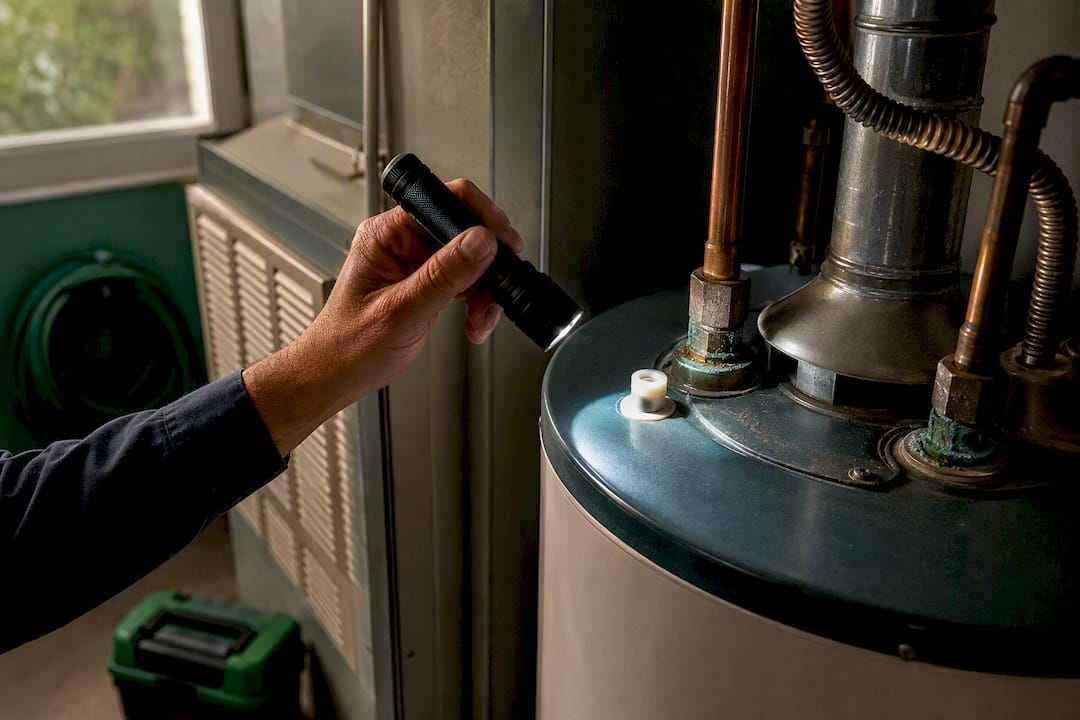
Before accepting a seller-provided warranty, we recommend verifying the payout caps on the biggest-ticket items in the house and confirming which technicians the plan actually uses in your area. Forbes Advisor notes that warranties function as real negotiating currency in transactions, but only when the terms hold up. Always check manufacturer and builder warranties first, since duplicate coverage wastes money either party could put toward closing costs.
Our Take: Stop Treating This as an Either/Or Decision
The conventional advice treats home warranty versus home insurance like a binary choice, pick one. That framing misses the point. Insurance is not optional if you have a mortgage, and it will never cover a dead dishwasher. A warranty will never cover a house fire. Treating them as competitors leads homeowners to either skip insurance shopping altogether or overpay for a warranty that duplicates coverage they already have through a builder or a credit card.
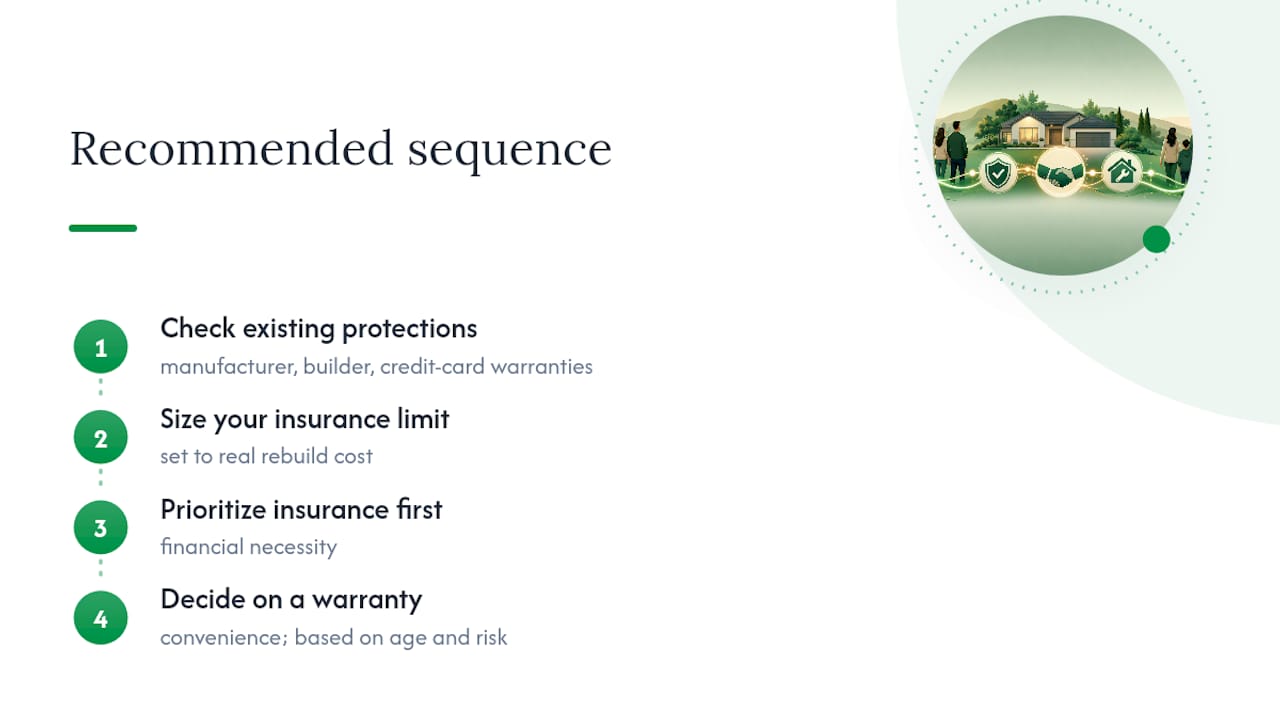
What actually matters is sequencing. Check your existing protections first, manufacturer warranties, builder warranties, credit-card extended coverage, before you pay for a third-party plan. Then size your insurance dwelling limit to your real rebuild cost, not your purchase price, since that number quietly drifts out of date every year. A warranty is a convenience purchase for people who dislike managing contractors. An insurance policy is a financial necessity. Prioritize the second, then decide on the first based on your home's actual age and your own appetite for risk.
— Team
How Desantis Realty Group Helps You Navigate Warranty and Insurance Decisions
Buying or selling a home in Santa Cruz County means navigating exactly these tradeoffs, often under a tight escrow timeline. Desantisrealty helps clients read disclosure documents, evaluate seller-offered warranties line by line, and negotiate contract language that actually protects you rather than the other party.

Whether you're weighing a seller's warranty offer during a purchase or deciding how to position your own listing in Santa Cruz, Monterey, or Silicon Valley, Mario Desantis and his team bring local market knowledge to every negotiation. If you're actively searching for a home and want guidance on what coverage actually matters for a specific property, browse current Santa Cruz listings or reach out through Desantis Realty Group to talk through your next move.
Sources
Key claims in this article draw on Progressive, Forbes, Consumer Reports, This Old House, and Experian. Read your own contract terms and check your state insurance regulator's site before signing anything.
- Home Warranty vs. Home Insurance | Progressive
- Is buying a home warranty worth it? | Consumer Reports
- Home warranty vs. home insurance | Forbes
- Home insurance vs. home warranty | Experian